

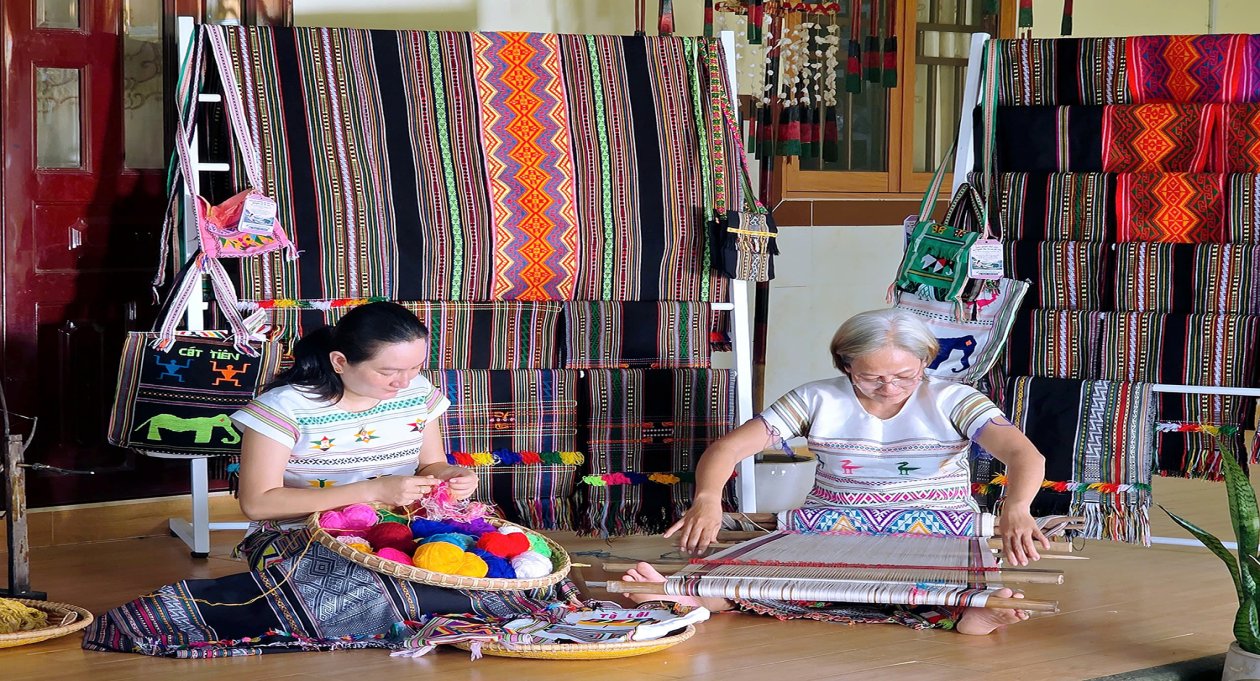
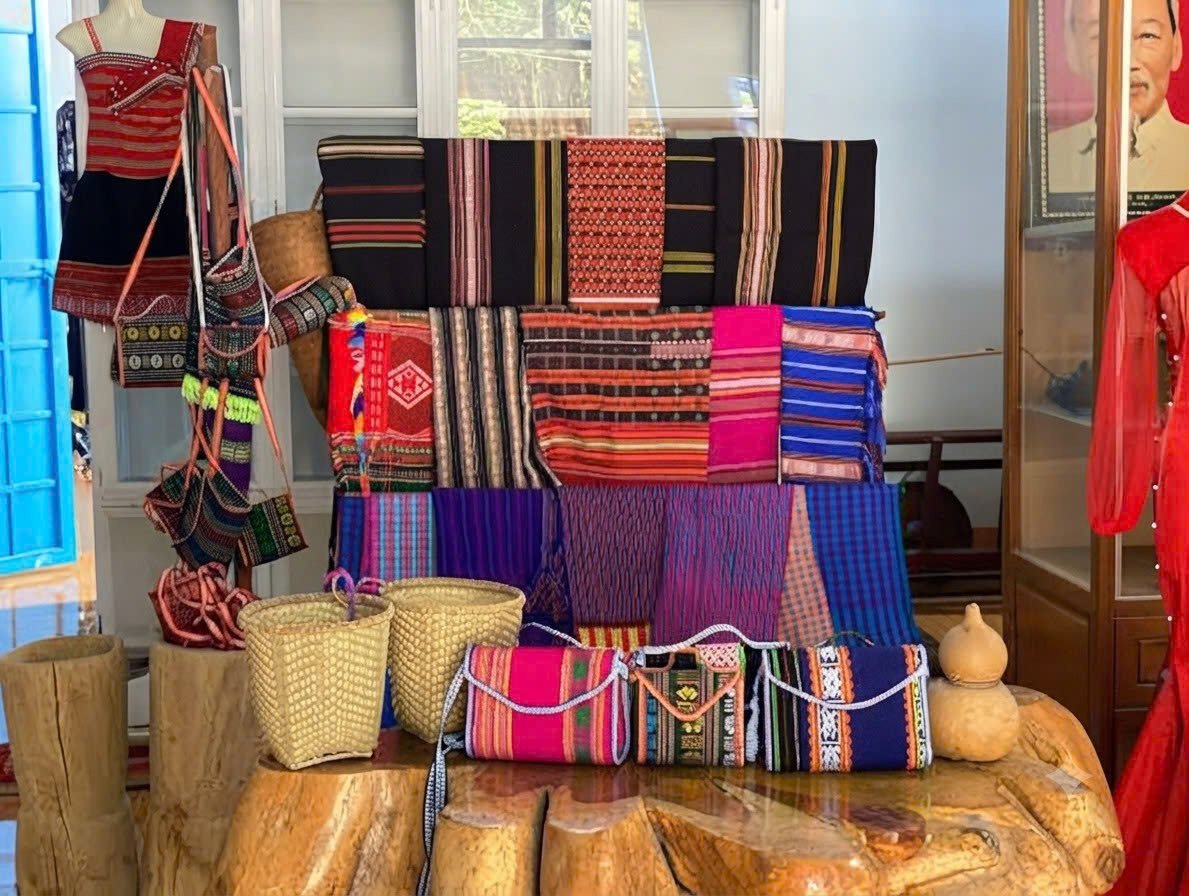
Exquisite handwoven brocade products of Dong Nai's ethnic minority communities
Chapter 01 —
The living looms of Ta Lai and Bom Bo
In the tranquil Ma village of Ta Lai, nestled alongside the Dong Nai river, the rhythmic clack of wooden looms welcomes visitors into an age-old storytelling tradition. Here, elderly Ma women, led by dedicated culture bearers such as Artisan Ka Tuyen, serve as the devoted custodians of handwoven brocade, a craft deeply intertwined with their spiritual connection to nature and ancestral beliefs. Sitting beside these master weavers, travelers learn that every thread begins with raw forest gifts and carries the oral history of the clan, where motifs serve as a silent alphabet passed down from mothers to daughters. Artisans patiently demonstrate the meticulous, all-natural process of ginning and spinning locally grown cotton, followed by boiling yarns with forest tree bark, wild roots, indigo leaves, and mineral-rich stream mud to achieve enduring shades of crimson, turmeric yellow, and deep charcoal.
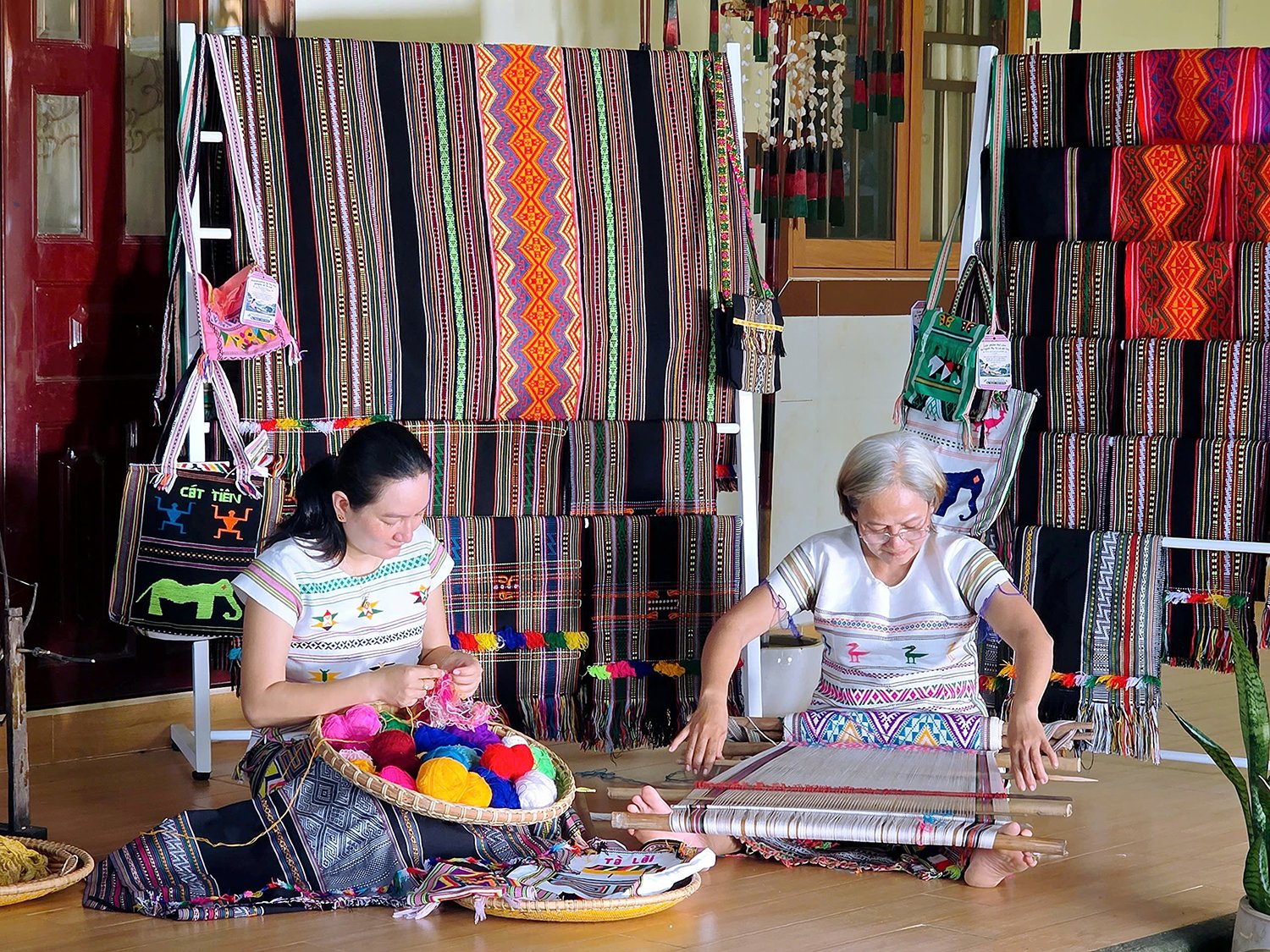
Sitting beside these master weavers, travelers learn that every thread begins with raw forest gifts
Under the gentle guidance of local craftswomen, visitors can sit at the traditional backstrap loom, bracing the wooden beam with their feet while learning to separate warp threads and pass the wooden shuttle themselves. This hands-on immersion reveals the remarkable dexterity required to form intricate geometric patterns depicting river waves, rolling mountain peaks, centipedes, and golden rice stalks. A similar sense of wonder awaits further north in Soc Bom Bo and Bu Gia Map, where S’tieng weavers keep their bold, contrasting textile heritage alive. Before departing, travelers can browse community cooperatives and village craft stalls for thoughtfully adapted keepsakes, bringing home handwoven scarves, crossbody bags, clutches, coasters, and table runners that carry the unmistakable warmth of indigenous artistry.
Chapter 02 —
Carving bamboo and shaping forest melodies
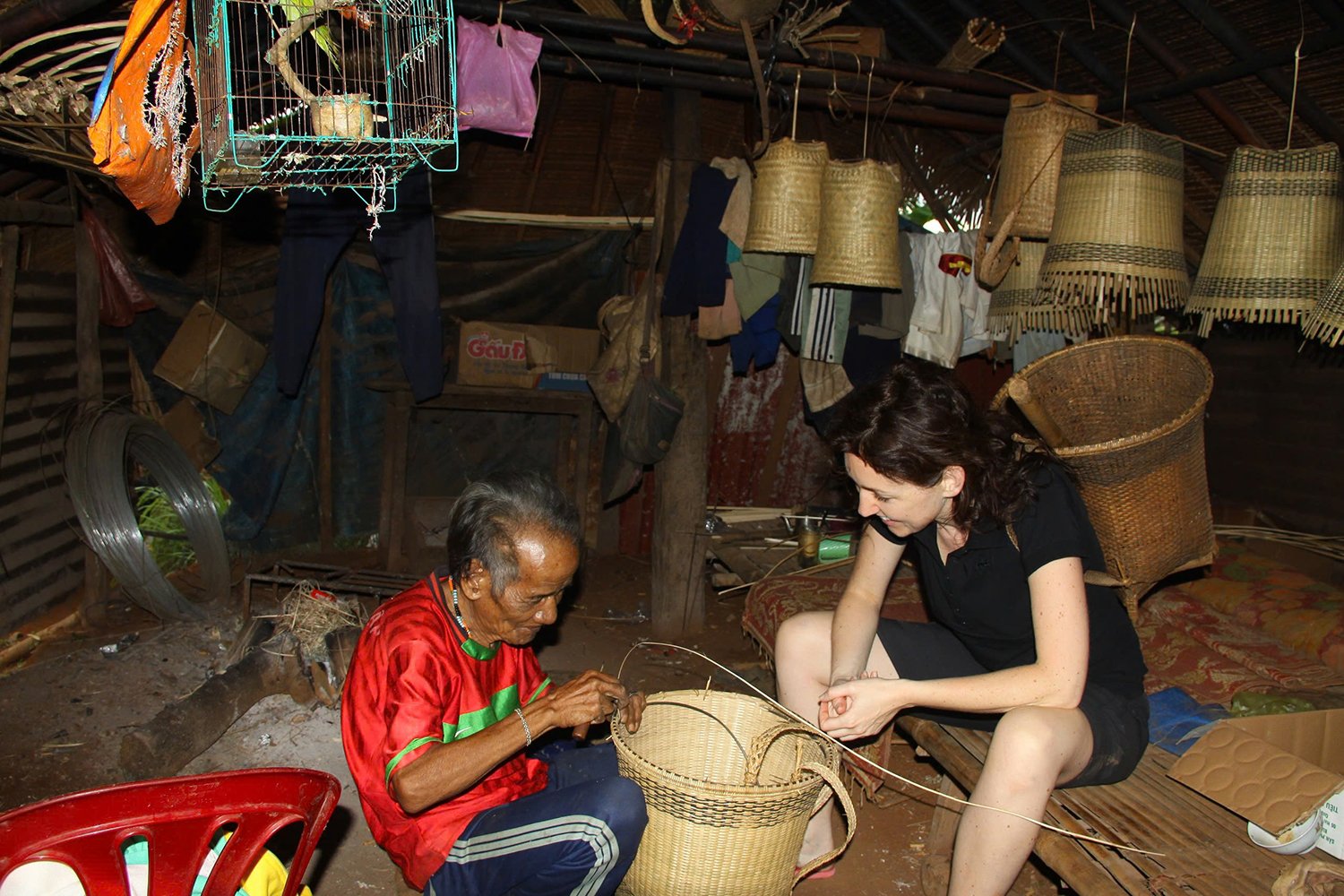
While women preserve the language of textiles, the men of the Ma, S’tieng, and Cho Ro communities channel their ingenuity into rattan and bamboo weaving as well as traditional musical instrument making. In villages across Tri An, Dinh Quan, and Loc Ninh, skilled craftsmen split wild forest rattan and aged giant bamboo into paper-thin, flexible strips to fashion sturdy back-baskets, winnowing trays, rice containers, and intricate stream-fishing traps. The prized S’tieng and Ma back-baskets stand out for their raised diamond-shaped motifs and glossy mahogany patina, achieved by curing the finished pieces above the kitchen hearth in fragrant wood smoke for months to protect against insects and ensure lifelong durability. Travelers visiting community-based tourism hubs can join interactive workshops alongside village elders, learning how to whittle bamboo splints, prepare natural rattan bindings, and weave small, personalized trinket baskets or woven bracelets to take home.
A master craftsman carefully selects aged bamboo tubes to assemble a traditional M’buot gourd mouth organ
Equally captivating is the art of crafting traditional musical instruments, lovingly preserved by dedicated elders and master artisans in Nghia Trung and Bom Bo. Watching a craftsman carefully measure, hollow out, and beeswax-seal aged bamboo tubes into a dried calabash shell to assemble a M’buot gourd mouth organ, or tune the bamboo strings of a resonant Goong zither, reveals a profound respect for nature’s acoustics. In indigenous folklore, these instruments act as a spiritual bridge between humans and forest deities during harvest prayers and New Rice festivals. Visitors are warmly invited to test these instruments under the artisans' guidance and listen to ancient epics and lyrical folk songs beside a flickering hearth, gaining intimate insight into how music anchors community festivals and daily life, with miniature decorative bamboo instruments also available as meaningful souvenirs.
Chapter 03 —
A tapestry of cultural exchange
Exploring Dong Nai’s craft heritage also unveils a broader mosaic of cultural exchange among the ethnic groups sharing this fertile land. In the borderland villages of Loc Thanh and Hung Phuoc, Khmer artisans uphold the delicate craft of sculpting ornate ceremonial masks, crowns, and props for traditional Ro Bam theater alongside finely plaited bamboo wares and palm-leaf keepsakes. Meanwhile, historic Chinese communities in Tran Bien and Long Khanh welcome guests into heritage ceramic studios, where visitors can try hand-glazing traditional speckled stoneware pottery, as well as time-honored herbal tea workshops offering aromatic wellness blends. Further across Xuan Loc and Thien Hung, Tay and Nung families share the rhythmic craft of hand-forged iron farming tools and the botanical secrets of brewing fragrant forest-leaf rice wine, allowing guests to sample local infusions and bring home bottled herbal spirits or handcrafted ceramic pieces.
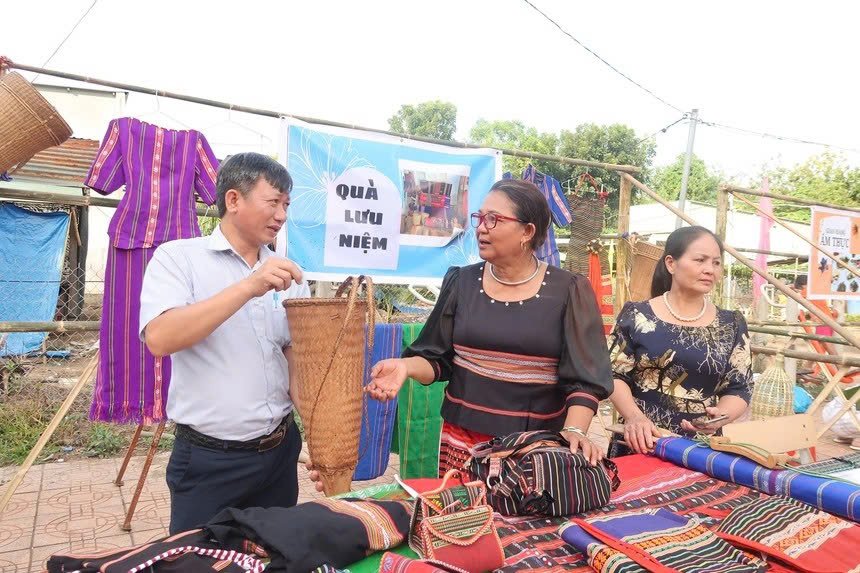
Visitors exploring traditional brocade textiles and woven bamboo crafts of the S'tieng people
Each stop along this cultural route transforms sightseeing into meaningful human connection. By stepping into local workshops, sharing stories with master artisans, and choosing authentic handmade keepsakes, travelers become active participants in sustaining these timeless traditions, leaving Dong Nai with memories woven as richly as the brocade itself.