The silent mirror of the Highlands
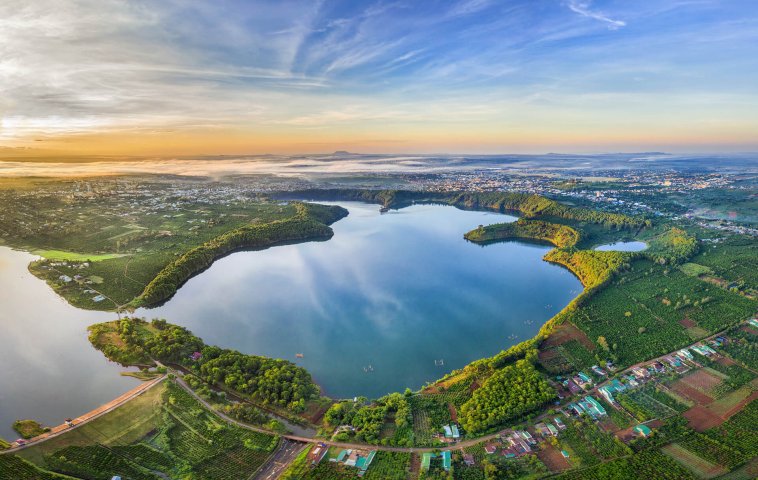
Lak Lake is the largest natural freshwater lake in the region, a serene expanse cradled by rolling hills and primordial forests. To witness it at dawn is to see a landscape painting come to life. As the morning mist gently detaches from the water's surface, the silhouettes of traditional dugout canoes glide effortlessly across the glass-like water. These narrow vessels, meticulously carved from single tree trunks, are steered by fishermen whose movements feel less like labour and more like a slow, rhythmic dance.
The shoreline is a patchwork of emerald rice paddies and wetlands, where the water changes character with the seasons. In the autumn, the surrounding fields burn a brilliant gold, contrasting sharply with the deep, moody blues of the lake and the distant purple contours of the Chu Yang Sin Mountain range.
Echoes of the longhouse: A cultural sanctuary
Beyond its physical splendour, the true soul of Dak Lak is found in its ancient human tapestry, preserved by the M'nong and Ede indigenous communities. Along the banks of Lak Lake, traditional villages such as Jun Village and M'Lieng Village offer an authentic glimpse into a matrilineal society structured around the communal longhouse.
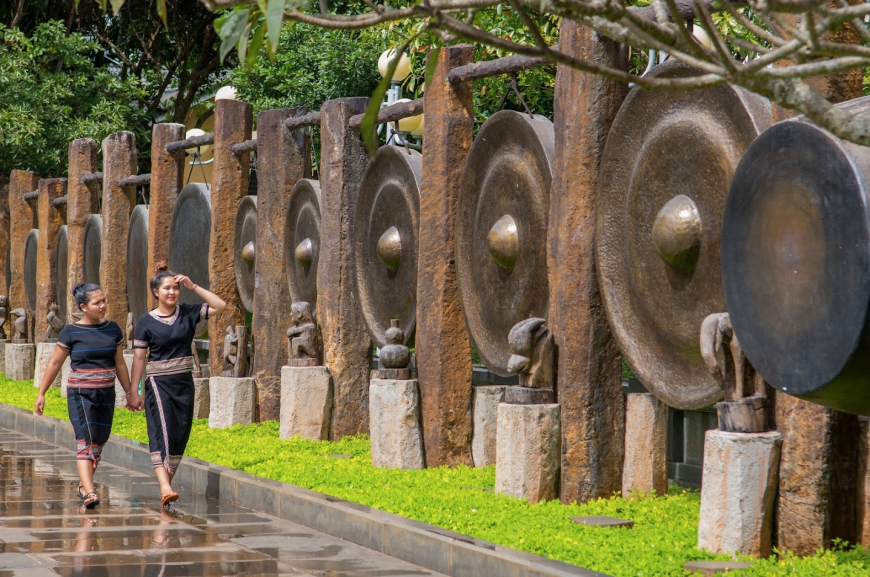
The echo of the gongs
The cultural space of the gongs here is not a performative relic, but a living language recognized by UNESCO. It is an acoustic embodiment of the hills, thunderous, deep, and haunting.
Life here moves to an ancient cadence. The architecture of the longhouses, stretched out like ships resting on the land, reflects a profound connection to the earth and family lineage. Visitors are welcomed not as spectators, but as guests to experience a way of life where stories are still sung and local rice wine (rượu cần) is shared from a communal clay pot through long bamboo straws.
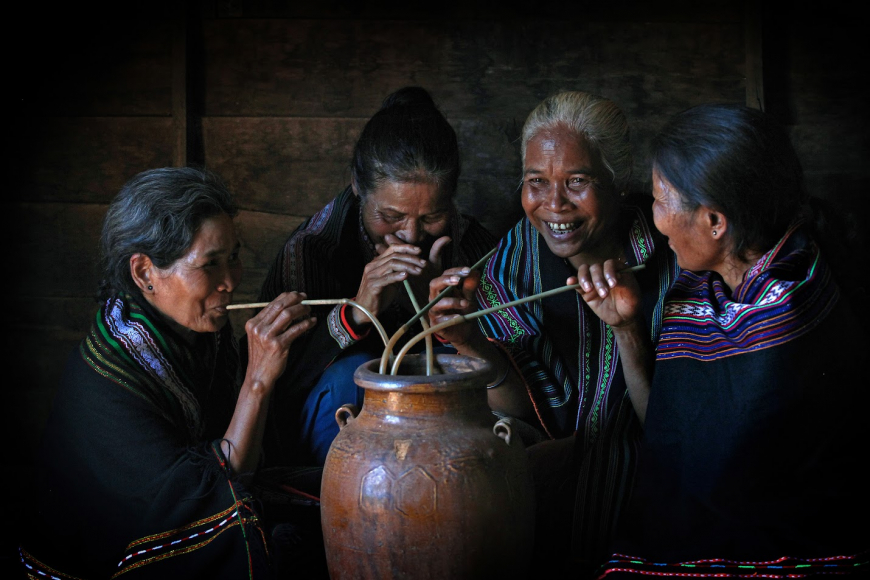
The scent of soil and spirit
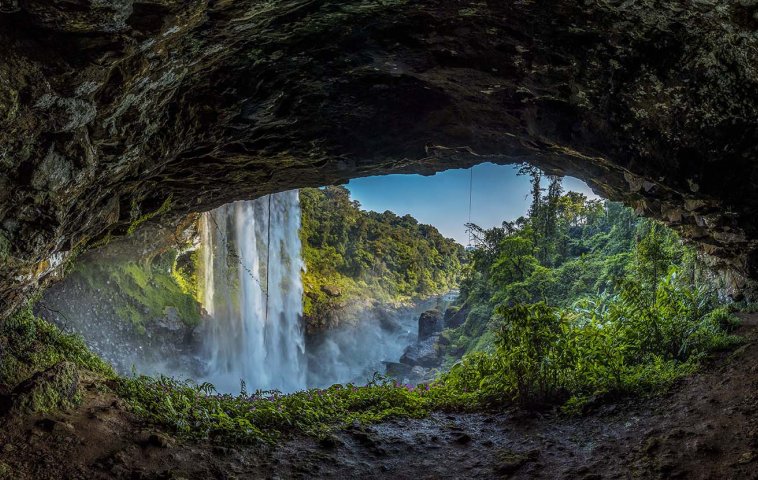
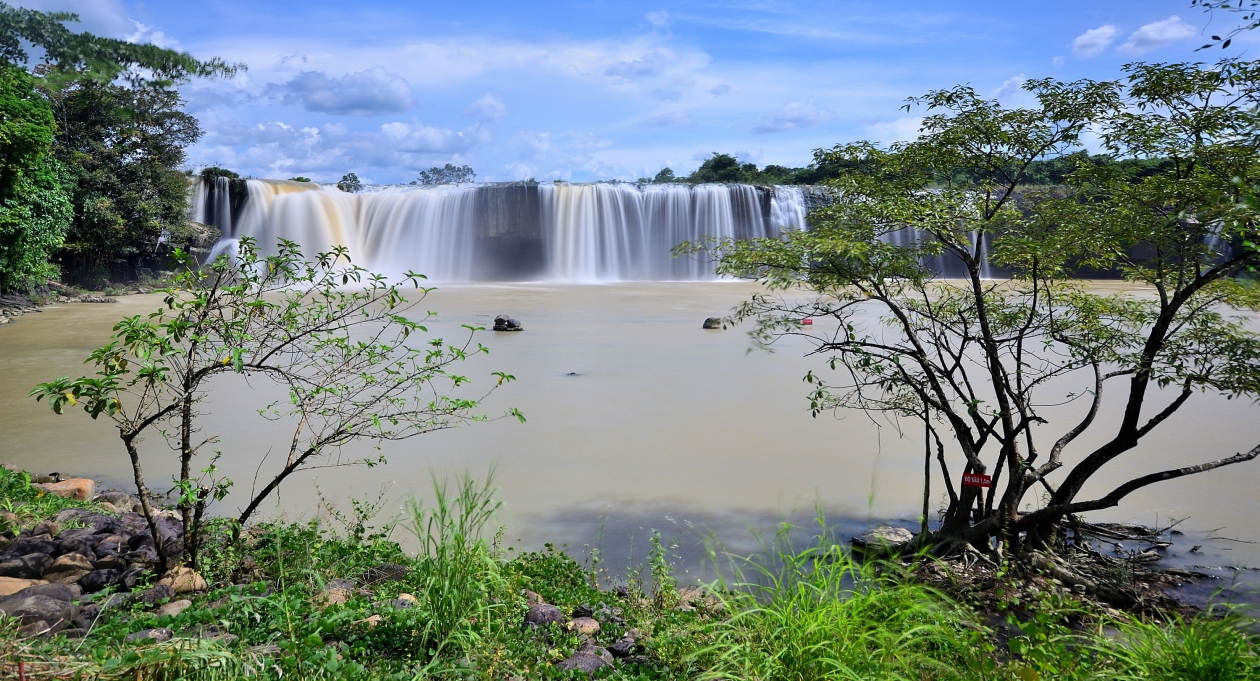
To explore the wider Dak Lak province is to immerse oneself in a land of sensory contrasts. It is a place where the thunderous roar of Dray Nur and Dray Sap waterfalls breaks the silence of the jungle, casting permanent rainbows into the mist. It is also the undisputed capital of coffee, where vast plantations stretch over hillsides, blanketing the earth in fragrant white blossoms in spring and crimson berries in winter.
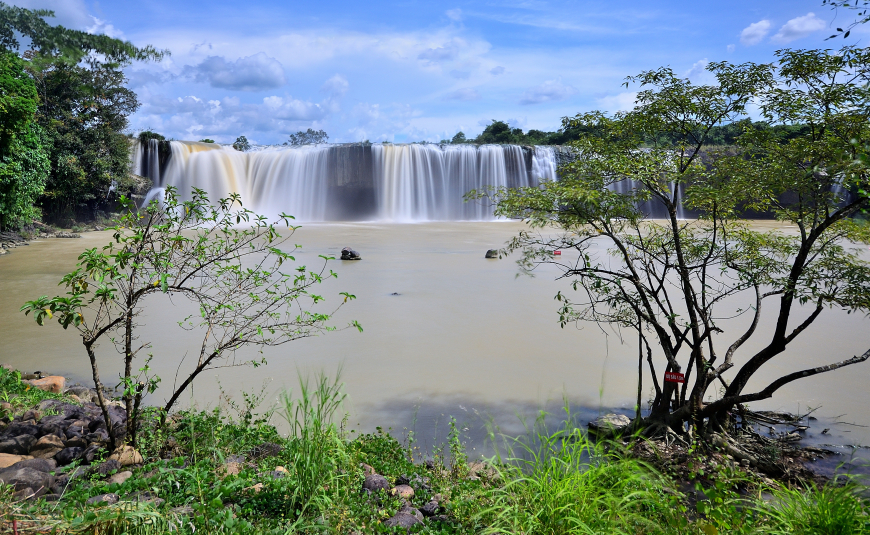
Dray Nur waterfall
For the international traveller seeking a raw, unvarnished encounter with nature, Dak Lak provides the ultimate antidote to the predictable. It is a destination that does not merely show itself to the eye; it settles in the chest, leaving an indelible imprint of a wild, soulful, and fiercely authentic Southeast Asia.