

At Whale Island, preserving the environment has never been a strategic choice.
It was an evidence.
You don't set up on an uninhabited island, in the middle of a coral reef, just to turn your back on it. Without a living reef, without crystal-clear water, without a preserved forest, the island lost its very reason for being.
This evidence demanded resistance against the sirens of heavy development and immediate profit. It is one of the rare places in Vietnam that preferred to renounce certain markers of modern hospitality, rather than the integrity of the place.
The recent change of ownership has not questioned this course. The will to preserve this confetti of rock, forest, and reef remains intact.
Here, sustainability is not a slogan painted in green.
It is a daily constraint.
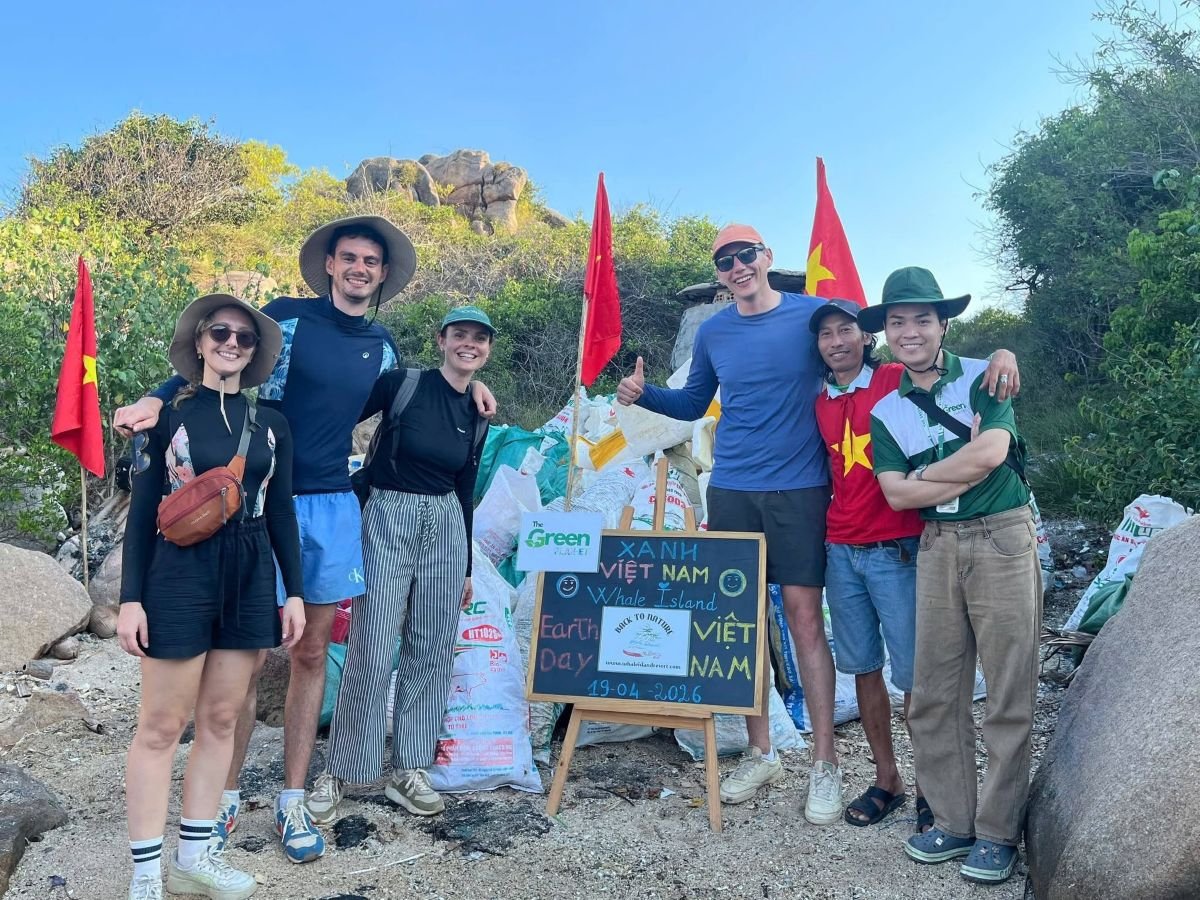
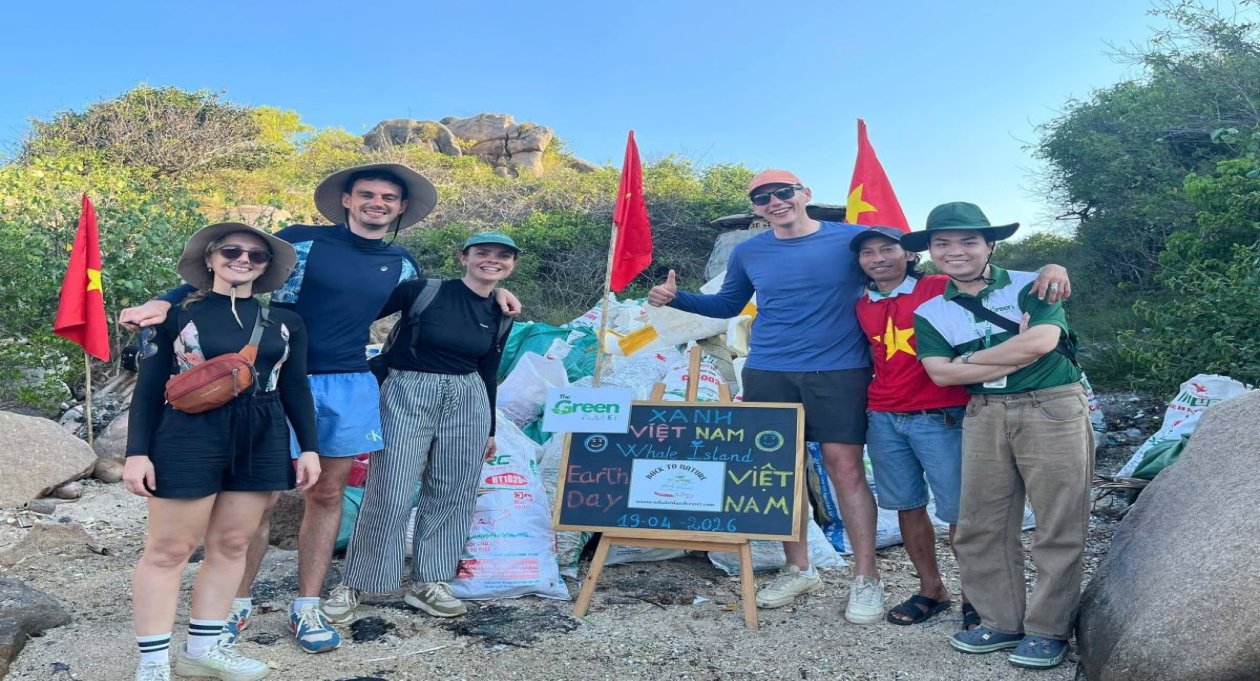
Whale Island regularly cleans up waste around the island, with the support and participation of the local community and visitors
1. Harmony rather than domination
We are no longer in the hospitality business; we are in the ecological maquis.
The relief of Hòn Ông was never corrected to accommodate a hotel.
It is the hotel that adapted to the relief.
The bungalows follow the natural curves of the island, disappearing under the trees and letting the forest hold first place. Here, we haven't flattened the hills to plant private pools, nor poured hundreds of meters of concrete facing the sea.
The materials tell the same story. Wood, bamboo, stone, rattan, palm-leaf roofs, furniture crafted from old fishing boats... Nothing was chosen to impress. Everything was thought out to belong to the place.
The beauty of Whale Island does not depend on what has been built.
It depends above all on everything that never was.
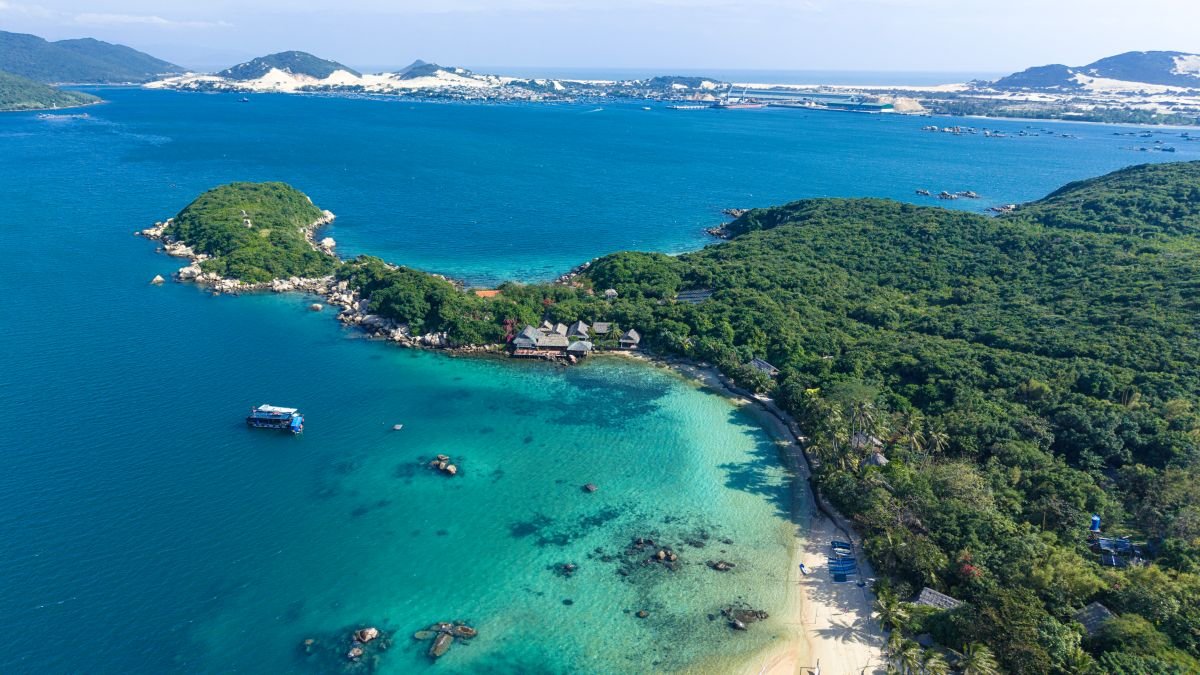
The crystal-clear waters of Whale Island
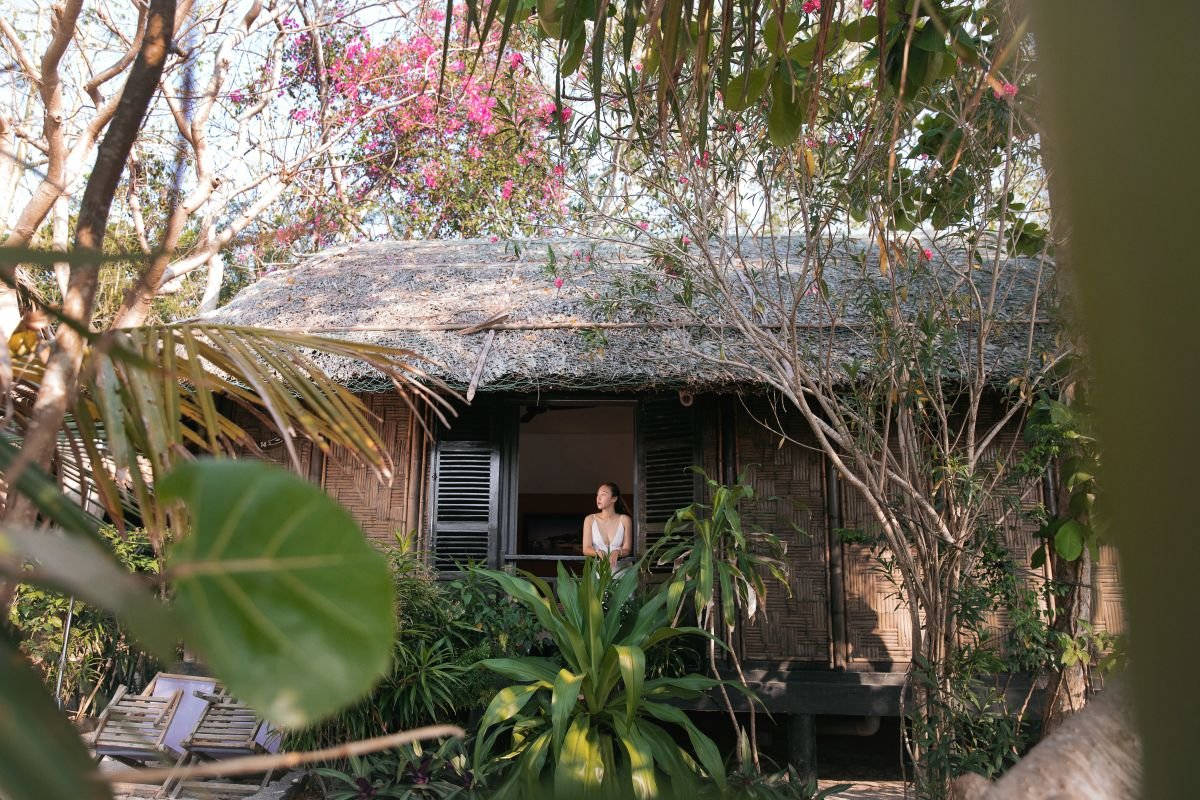
All bungalows feature thatched roofs and are surrounded by lush greenery
2. Repairing what the ocean loses
The preservation of coral reefs is part of the island’s DNA. Threatened by warming oceans, pollution, and certain fishing practices, they have been the focus of restoration programs run for nearly thirty years.
The principle is simple: install structures that serve as a support for young corals to attach to, accelerating the recolonization of the reef. The most recent campaign, conducted with the experts from Rainbow Divers, with the support of the European International School Ho Chi Minh City (EIS) and the PADI AWARE Foundation, allowed for the immersion of ten structures handcrafted from concrete and recycled glass bottles.
As the corals develop, fish, invertebrates, and other species progressively recolonize the seabed. On a global scale, ten structures may seem derisory.
On the scale of this bay, it is a form of resistance.
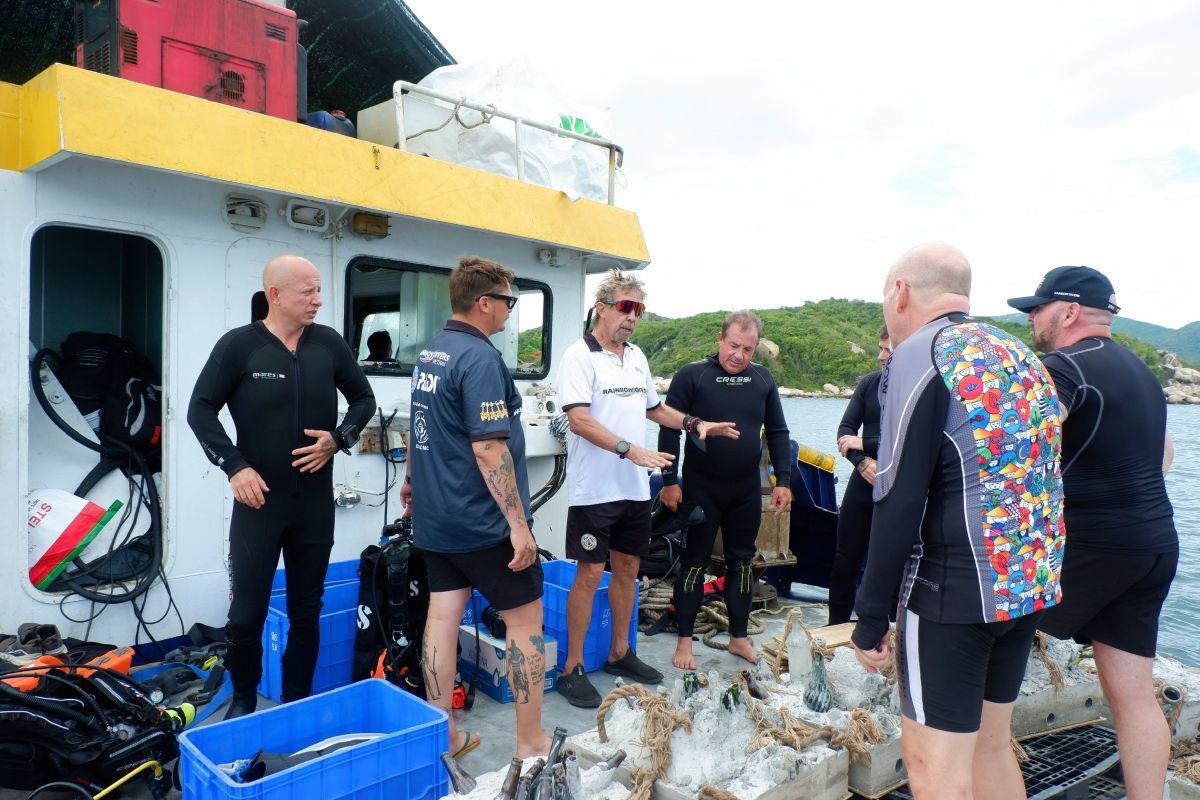
Placing coral substrates on the seabed to provide shelter for marine life
3. Our commitment, day by day
On Hòn Ông, nature always has the last word. Here, every decision counts: producing our own energy, preserving coral reefs, saving water, building without defacing the island, working with local communities, and offering our teams exemplary working conditions.
Since 1997, Whale Island Resort has moved forward with a simple conviction: a place this exceptional is not to be exploited, it is to be protected. This approach aligns with Travelife standards, featuring concrete objectives, measured results, and continuous improvement rather than grand promises.