
-
Hue: Vietnam’s Quiet Gateway to a World of Birds
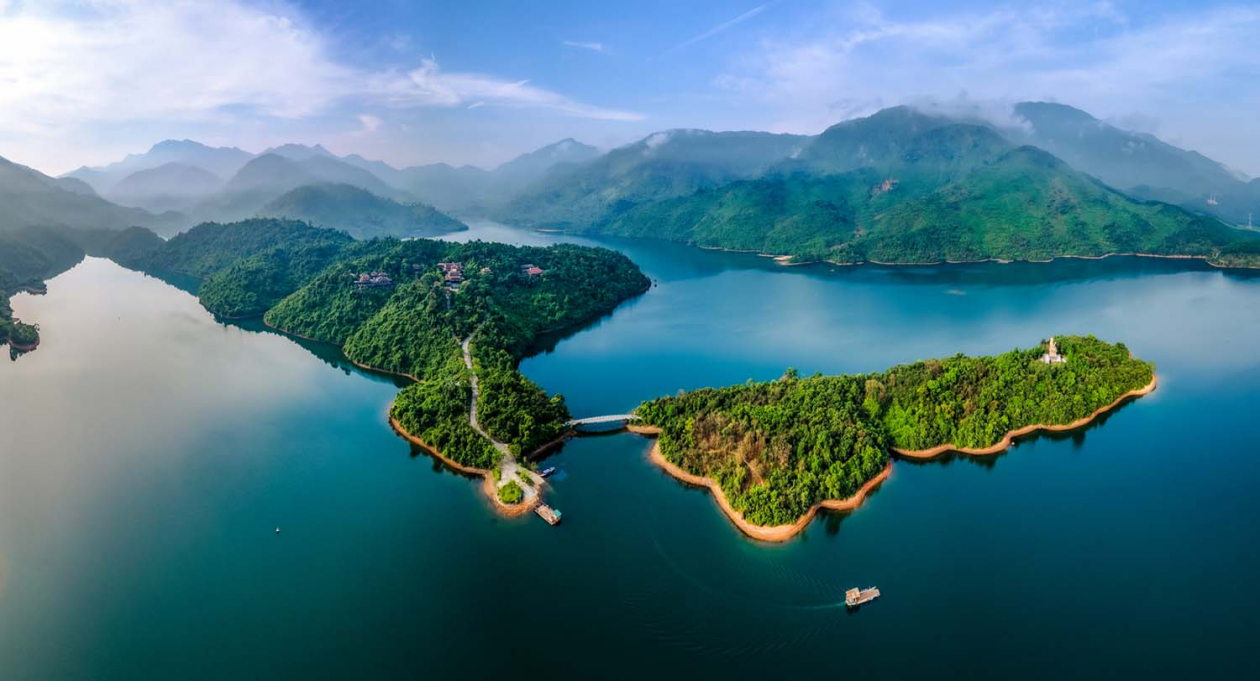
In central Vietnam, the former imperial capital of Hue is emerging as an unexpected haven for nature lovers, particularly those drawn to the rising global trend of birdwatching. Framed by mountains, lagoons and ancient forests, the region offers a rare blend of cultural depth and biodiversity.

Just a short drive from the city lies Bach Ma National Park, one of the country’s most remarkable ecological treasures. Set within the Truong Son Range, the park is a sanctuary of tropical forests that shelter an extraordinary diversity of birdlife, making it a standout destination for birding in Southeast Asia.
According to Condé Nast Traveller Middle East, birdwatching trips are gaining momentum worldwide in 2026, with central Vietnam highlighted as a compelling destination. The region’s forests are alive with species such as the elegant greater racket-tailed drongo and the striking crimson sunbird, birds whose vivid colours and distinctive calls bring the landscape to life.
Vietnam as a whole is home to more than 900 bird species, including a number of endemics, underscoring its importance on the global birding map.
At the heart of this experience, Bach Ma National Park stands out with over 360 recorded bird species, spanning lowland tropical forests to misty montane ecosystems.

King Fisher in Bach Ma National Park
For birdwatchers, the park offers a rich catalogue of sightings, from elusive endemics to visually striking forest dwellers. Among the most sought-after species are: Silver pheasant and the rare Edwards’s pheasant; Red-headed trogon and golden-throated barbet; Long-tailed broadbill and silver-breasted broadbill; White-winged magpie and Indochinese green magpie; Masked laughingthrush and white-gorgeted flycatcher
Particularly notable are species such as the critically endangered Edwards’s pheasant and the near-endemic Vietnamese crested argus, both symbols of the region’s conservation significance.
Birdwatching in Bach Ma is not simply about ticking species off a list, it is an immersive journey into one of Vietnam’s most pristine natural environments. Early morning treks reveal forests echoing with birdsong, while mist drifting through the canopy adds an almost cinematic quality to the experience.

Long-tailed broadbill
The best time to visit typically falls between December and May, when conditions are favourable for sightings and the forest is at its most accessible.
What makes Hue particularly compelling is the seamless connection between culture and nature. Travellers can spend the morning exploring imperial citadels and ancient pagodas, then venture into the wild landscapes of Bach Ma by afternoon.
Nearby coastal resorts such as Lang Co further enhance the experience, offering opportunities to combine birdwatching with relaxed seaside stays, where even a private villa terrace may double as a vantage point for spotting native species in their natural habitat.
As global travellers increasingly seek meaningful, nature-led experiences, Hue and Bach Ma are quietly redefining Vietnam’s tourism narrative. Here, birdwatching becomes more than a niche pursuit, it is a gateway to understanding the country’s rich ecosystems and the urgent need to protect them.
In this tranquil corner of Vietnam, every birdsong tells a story of biodiversity, conservation, and the enduring harmony between people and nature.


