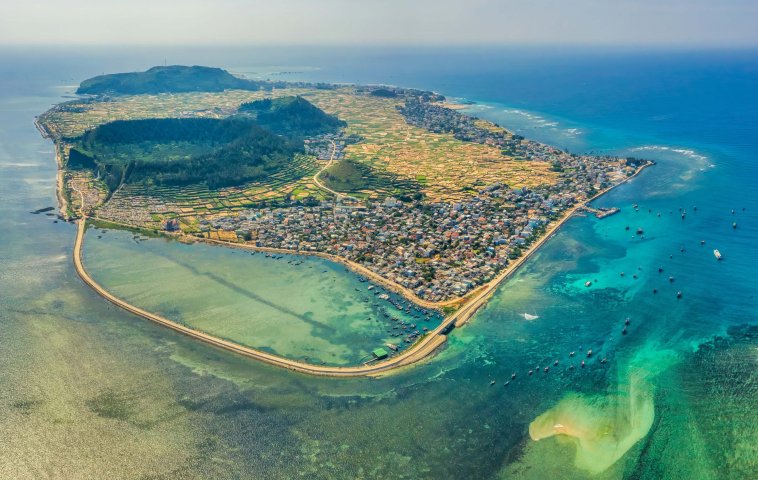
Formed by cataclysmic submarine volcanic eruptions millions of years ago, Ly Son is a masterclass in nature’s raw architecture. It is a place where jagged basalt cliffs collide with neon-turquoise waters, and ancient seafaring history blends seamlessly with a surreal, emerald agricultural landscape.
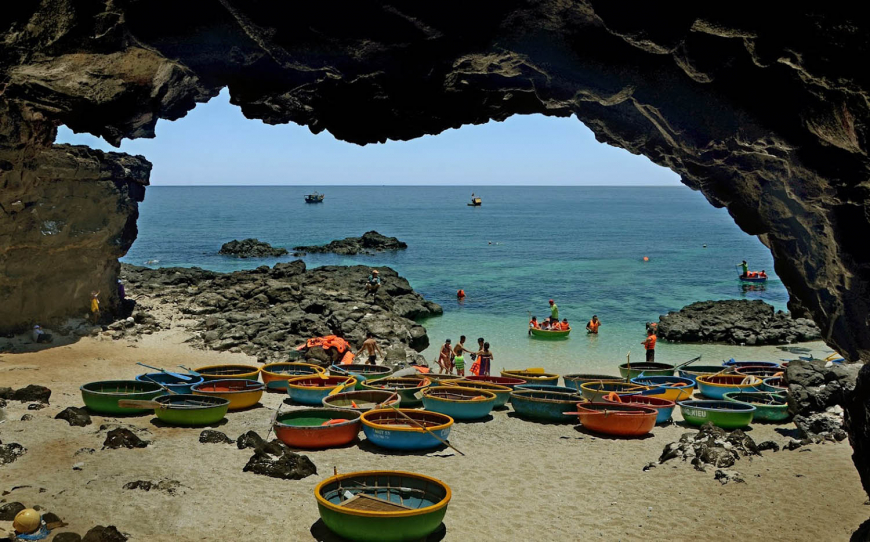
Ly Son in summer (Photo: dovafa@gmail.com)
The prime window for visiting Ly Son is from April to August, when the skies is brilliantly blue, the seas are calm, and the underwater visibility is exceptional.
Tourists around the world can fly into Da Nang International Airport or catch a connecting flight to Chu Lai Airport. From there, catch a taxi or a coach to Sa Ky Port in Quang Ngai, where comfortable speedboats make the scenic 35-to-45-minute crossing to the island multiple times a day.
A landscape forged in fire
Ly Son actually comprises two main islands: Cu Lao Re (the Big Island) and An Binh (the Small Island). To step onto the main island is to walk across the remnants of ten extinct volcanic craters.
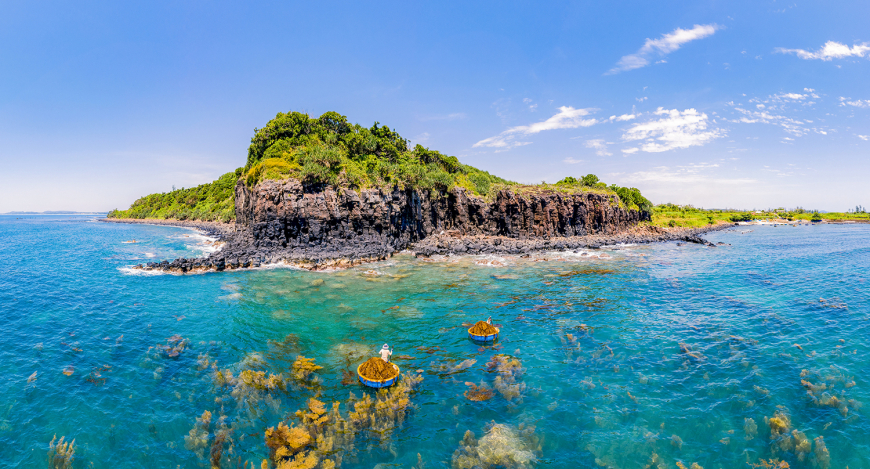
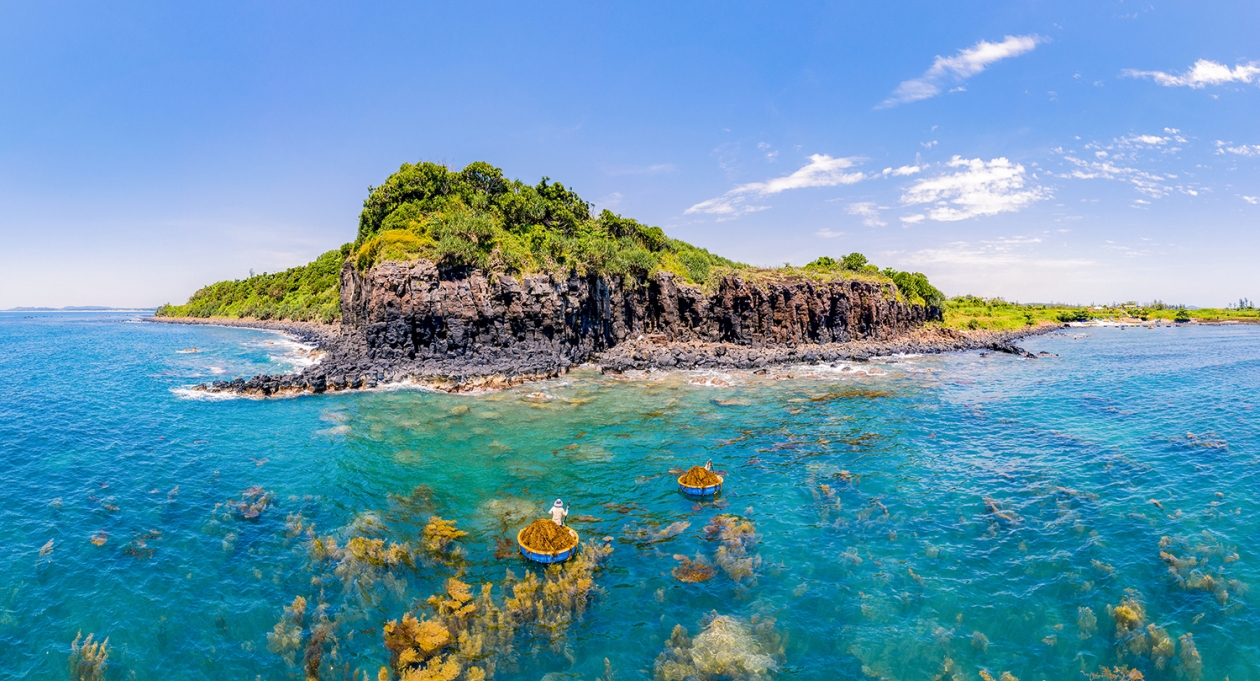
Seaweed season in Ba Lang An Cape (Photo: Le Huy Tuan)
The crown jewel of these geological wonders is Thoi Loi Mountain. Standing as the highest peak on the island, it is the lip of a massive, ancient crater that now cradles a freshwater reservoir. Walking along its rugged rim offers sweeping views of the island's starkly beautiful dual personality: on one side, the endless, moody blue of the sea; on the other, a checkerboard of vibrant green and white fields stitched into the dark volcanic earth.
During the seaweed season, hop on a cruise trip to Ba Lang An Cape to witness the colourful mixture of nature - the greenish, yellowish of seaweed surrounded by the blue turquoise sea water. Meanwhile, To Vo Gate, a natural, freestanding archway of black basalt stone, frames the horizon perfectly, making it a dramatic, melancholic spot to watch the sun sink below the waves.
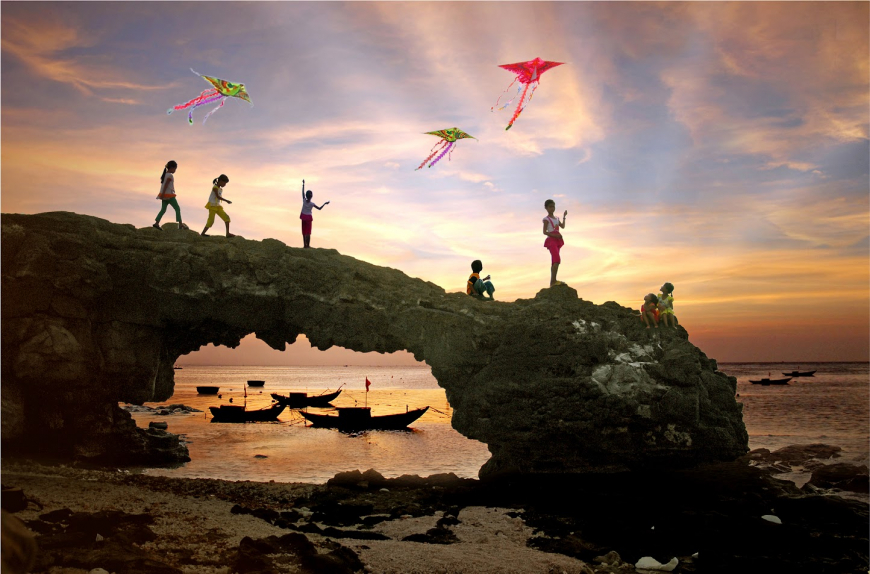
To Vo Gate (Photo: photoanhminhthe@gmail.com)
The "Kingdom of Garlic"
What truly surprises first-time international visitors is the island’s striking agricultural tapestry. Ly Son is affectionately known across Vietnam as the "Kingdom of Garlic", and the local farming techniques are as unique as the geography itself.
Because the soil is entirely composed of mineral-rich volcanic basalt, local farmers have developed a brilliant multi-layered cultivation method. They mix the dark volcanic earth with a top layer of clean, fine coral sand hauled from the beaches. This distinct combination protects the crops from harsh sea winds while locking in moisture.
From the cliffs above, these terraced plots resemble a minimalist modern art installation. The resulting produce, particularly the rare "single-clove garlic", is highly prized for its intensely aromatic, sweet, and non-pungent flavour profile, serving as a pillar of both local cuisine and traditional medicine.
Untamed serenity on the small island
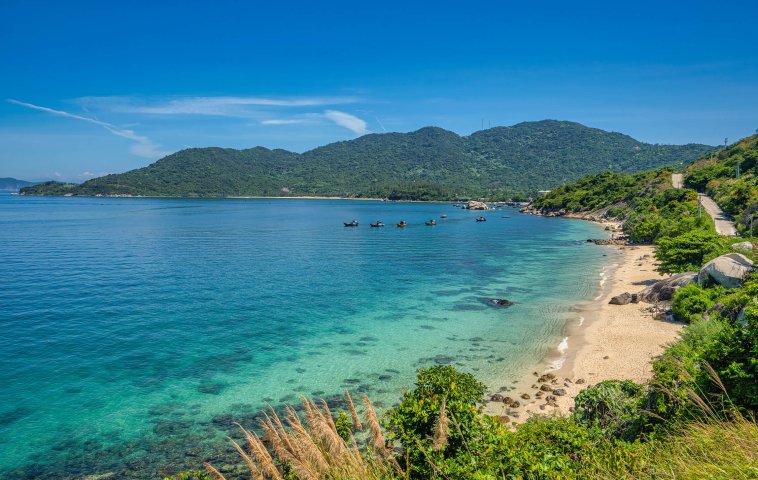
For those seeking absolute isolation, a quick 15-minute boat ride to An Binh (The Small Island) is non-negotiable. Free from cars and major development, it offers an encounter with wild, unblemished nature.
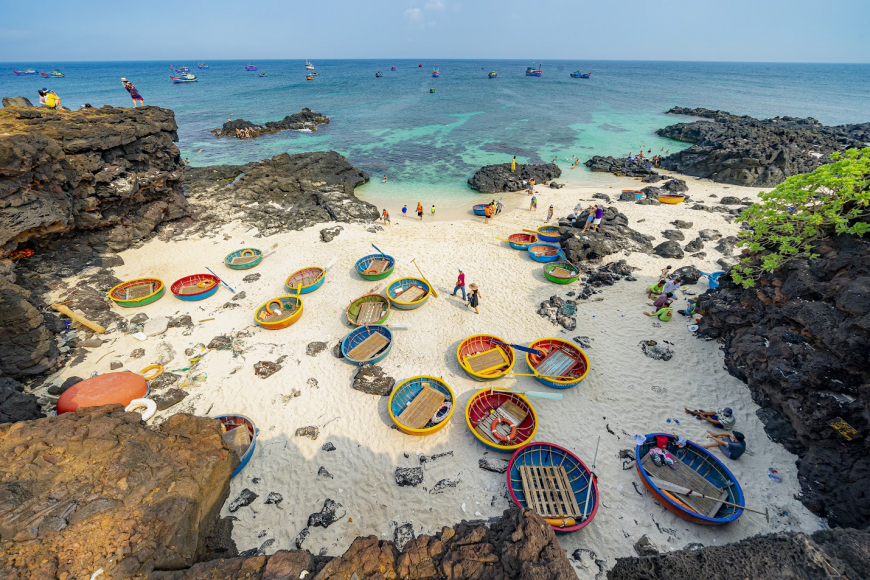
An Binh Beach (small island) (Photo: ngocduongphoto1962@gmail.com)
Here, the water possesses a mirror-like clarity. Fringed by imposing walls of black volcanic stone, the beaches lead out to a thriving underwater ecosystem. Snorkellers and divers can swim directly off the shore to explore brilliant, multi-coloured coral reefs teeming with marine life, experiencing an island ecosystem that feels entirely preserved in time.